
Executive summary
BTRY centralized fragmented R&D data into a device-centric system linking fabrication history, characterization results, and performance metrics.
Standardized KPI extraction across engineers made cross-device comparisons faster, more reproducible, and less dependent on individual workflows.
Process parameters are now structurally linked to battery outcomes, enabling systematic trend analysis and better iteration decisions.
Structured data in Balthazar is already being used with AI tools to explore correlations between fabrication parameters and battery performance.
The digital backbone prepares BTRY to scale toward higher-throughput production while maintaining traceability, quality control, and visibility into what drives performance.
Background
BTRY is developing a new class of ultra-thin solid-state batteries manufactured using semiconductor fabrication technologies. With the thickness of aluminum foil and compact enough to fit inside a credit card, these batteries can charge in minutes while operating safely across extreme temperature ranges from -40°C to 150°C.
By combining semiconductor-grade fabrication with advanced electrochemistry, BTRY is pushing the limits of what compact energy storage can achieve. As the company scales toward production, it is industrializing fabrication processes that involve hundreds of interdependent parameters and extensive characterization workflows. At this stage, scaling is no longer just a scientific challenge – it becomes an operational one.
The challenge
After proving technical feasibility and validating early market demand, BTRY entered the next phase: scaling R&D toward production readiness.
Each battery cell goes through a complex sequence of fabrication and characterization steps, generating both raw datasets and derived performance metrics that must remain linked to the device. As the number of experiments grows, the challenge is no longer generating data – it is preserving context.
Before implementing a centralized system, data was spread across shared drives and individual spreadsheets. Engineers developed their own ways of running experiments, processing results, and extracting KPIs, making cross-comparison increasingly difficult as the team scaled. Day-to-day work involved switching between tools, manually reformatting data, and rebuilding datasets before meaningful analysis could begin. Recipe names were documented, but process parameters were not structurally linked to performance outcomes.
Without the right infrastructure, every additional experiment risked creating more friction instead of more insight.
The solution: a device-centric R&D system
BTRY implemented Balthazar as its centralized R&D data and workflow platform. Rather than replacing existing workflows, the platform integrates with existing data generation processes and structures information at the point of capture.
The goal was to establish a device-centric system of record connecting fabrication, characterization, and performance data within a unified digital structure.
Each device is now linked to its complete fabrication history, including workflows, material configurations, and relevant metadata. Workflows are version-controlled, making parameter changes traceable and reproducible across iterations. Experimental knowledge no longer lives in individual spreadsheets or operator-specific workflows – it becomes part of a shared, reusable system.
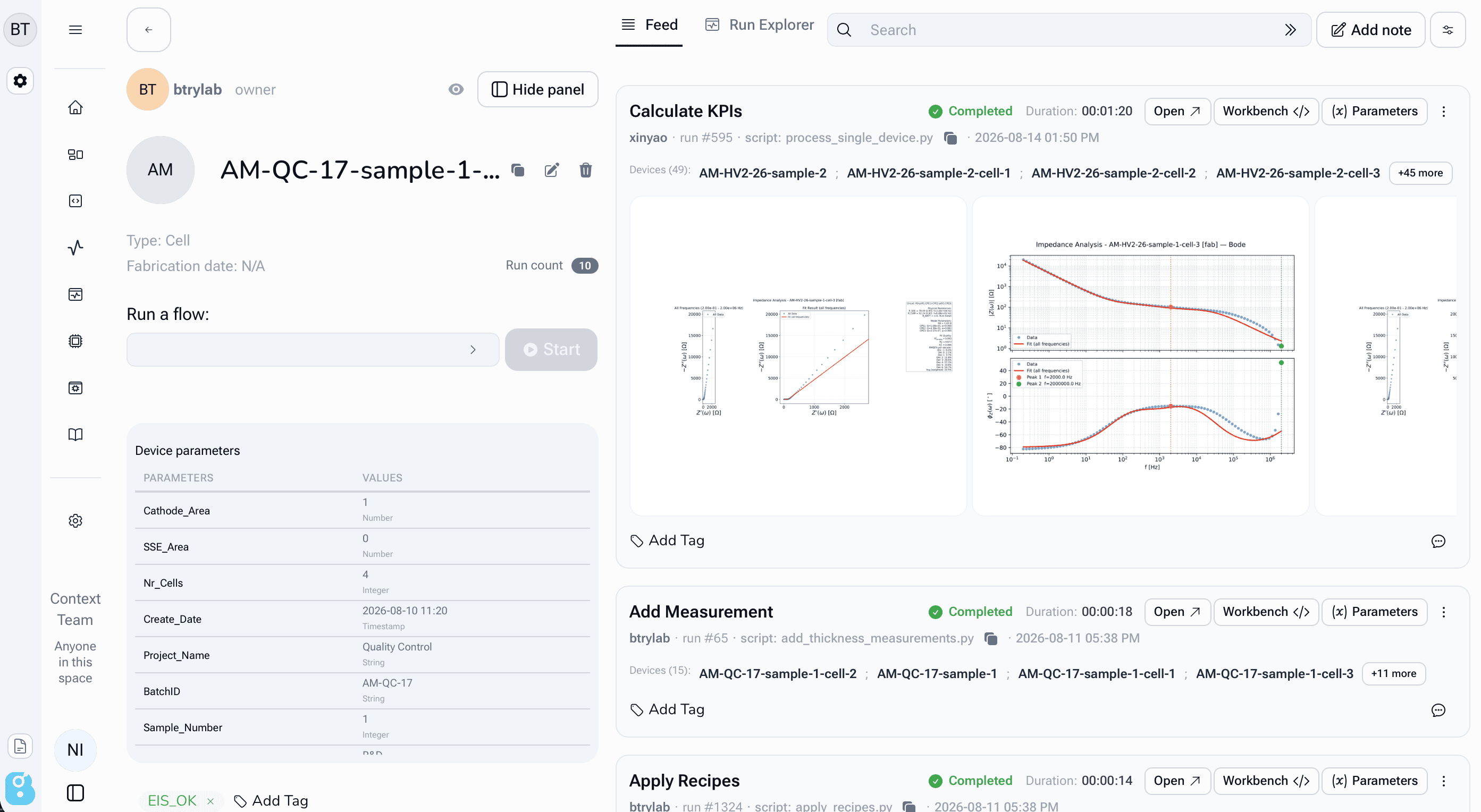
Figure 1: A cell-level overview in Balthazar connecting all the measurements to the design and fabrication process.
Analytics workflows are integrated directly into the platform, turning fragmented raw measurements into standardized, comparable results across the organization. KPI logic is shared across the team, eliminating discrepancies between operators and reducing the need for manual reprocessing before analysis.
Crucially, process parameters are now structurally linked to device performance. This enables systematic correlation between fabrication settings and battery outcomes, making trend analysis and parameter exploration significantly more efficient.
The platform also provides integrated dashboards and visualization tools that allow engineers and leadership to compare devices across iterations, monitor trends, and identify high-performing cells without manually rebuilding datasets. Analytical structure was added without adding analytical overhead: increasing insight without increasing workload.
Because the data is structured from the start, it is also AI-ready out of the box. The BTRY team has already used Balthazar data together with AI tools to explore correlations between fabrication parameters and battery performance, helping guide the next experimental iterations.
Impact
By implementing a centralized digital backbone, BTRY transformed its R&D operations into a more scalable learning system. Instead of spending time reconstructing experimental history, engineers can focus on interpreting results, comparing iterations, and deciding what to test next.
Cross-operator comparisons are now consistent and reproducible. Performance metrics are standardized and directly linked to fabrication context. Decisions are increasingly driven by structured relationships between process and performance, rather than manually assembled datasets.
Importantly, the infrastructure prepares the organization for scale. As throughput increases and production volumes grow, the system is designed to absorb larger data volumes while maintaining traceability and supporting quality control. In practice, this allows the organization to scale experimentation without losing visibility into what actually drives device performance.
The result is a more scalable R&D operation - one where increasing complexity leads to better learning, not less visibility.
“At the beginning of the start-up, comparing results across diverse experiments, from diverse projects, required going back to raw data and rebuilding the analysis each time. Now everything is structured according to our processes and automatically linked at the device level, so we can focus on interpreting results and making quick decisions. It also puts us in a much better position as we scale toward higher production volumes; we can identify bottlenecks in our production process and improve our workflow. The unique flexibility of the system is such that any new processes or parameters to integrate or monitor can be easily added to the global workflow. Balthazar is not just a tool helping us with a large input of information that we can organize, it is shaped for and integrated directly in all the processes of the R&D projects and in our prototype production unit.”
-Nicolas Osenciat, R&D Lab Director